
Slide
The Emergence of Shared Meaning in Hypermedia Networks with No Central Gravity.
Case: Hypertext Conference 2026
Slide
Hypertext’s unfinished revolution
The Web made publishing open. It did not make collaboration open.
We can link documents, but we still struggle to build durable shared meaning across people, tools, communities, and time.
Slide
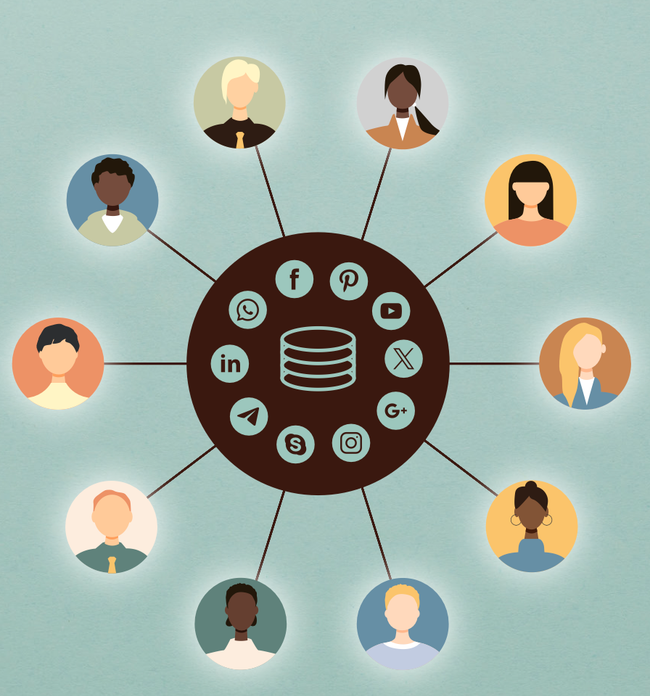
The gravity we acquired
Central platforms now control:
identity
conversation
discovery
memory
tooling
ownership
Although effective at large-scale distribution and attention capture, these systems restrict ownership and limit the possibilities for human collaboration.
Slide
What are the problems from today’s Web?
How can we connect and associate without limitation?
How can we keep ownership of our knowledge without giving it away to a central platform or gatekeeper?
How can we prevent AI from having us building in closed boxes?
How can we build our own communities without being trapped in a server?
How can we bootstrap our own tools to help knowledge communities share meaning better?
Slide
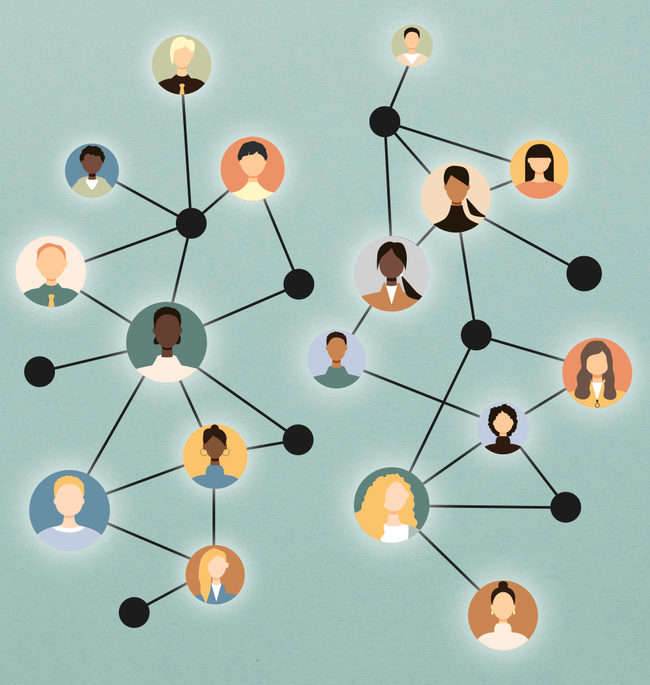
A Network with No Central Gravity:
No single authority controls identity, addressing, storage, or interaction.
We need more than an open link base. We need hypermedia objects that can move across the Internet without losing identity, authorship, version history, or links.
documents are signed by authors
object operations are sync locally or remote following the same protocol and schemas.
protocol and schemas can be extended to invent new resources
versions are immutable
content is be replicated across peers
each user has their own graph
many tools can interpret the same protocol
Slide
How Shared Meaning Emerges
Engelbart's Augmentation Conceptual model: It is still valid
Engelbart's augmentation framework provides a pragmatic model of human augmentation, defining the co-evolution of tools, language, and practices.
By "augmenting human intellect" we mean increasing the capability of a man to approach a complex problem situation, to gain comprehension to suit his particular needs, and to derive solutions to problems. Increased capability in this respect is taken to mean a mixture of the following: more-rapid comprehension, better comprehension, the possibility of gaining a useful degree of comprehension in a situation that previously was too complex, speedier solutions, better solutions, and the possibility of finding solutions to problems that before seemed insoluble. And by "complex situations" we include the professional problems of diplomats, executives, social scientists, life scientists, physical scientists, attorneys, designers—whether the problem situation exists for twenty minutes or twenty years. We do not speak of isolated clever tricks that help in particular situations. We refer to a way of life in an integrated domain where hunches, cut-and-try, intangibles, and the human "feel for a situation" usefully co-exist with powerful concepts, streamlined terminology and notation, sophisticated methods, and high-powered electronic aids.
Conversation, where communities engage in argumentation, express perspectives, and negotiate shared understanding;
Concept creation, where concepts are introduced and refined, serving as tools for the augmentation process;
Structure formation, where knowledge emerging from these interactions is captured and organised into hierarchically open hypertext documents and ontologies;
Reorganisation, where structures evolve as understanding deepens and knowledge emerges as knowledge output.
Slide
Hypertext Conference 2026 as the case
What would it look like to apply Engelbart’s augmentation process to the Hypertext Conference?
What if a conference were not just an event, website, or proceedings volume, but a living hypermedia knowledge space?
Examples:
papers connected to discussions
comments as reusable context
sessions linked to questions and themes
future conferences inheriting structured memory
other communities able to reuse and extend the knowledge
Slide
To support shared meaning, open hypermedia needs:
Web of Trust — people own their identity and social graph
Provenance and Digital Rights — authorship, versions, and reuse are traceable
Unbreakable Links — references survive across servers, tools, and time
Fine-grain linking — every entity down to a character can be addressed
Bootstrapping: Building Tools for Thought — Apps, Views, Tools interpret the same protocol of blobs
Slide
Questions for the Hypertext community
What is the goal of the community?
What should our knowledge repository help answer?
How should papers, conversations, and debates connect?
Is Hypertext a community of communities maybe?
Is the Hypertext Conference the central node of all hypertext practioners accross the world universities?
Shouldn't other hypertext communities be able to interact and reuse our knowledge.
Should our knowledge repositories help train hypertext practioners?
Closing line:
The unfinished revolution of hypertext is not only better links. It is giving communities the ability to think together without surrendering their knowledge, identity, or tools.
Look and Feel:
Do you like what you are reading? Subscribe to receive updates.
Unsubscribe anytime