
The Handling of Vernon Lee's Words: Developing Scholarly Editions in the Age of Hypertext
Sally Blackburn-Daniels, School of Social Sciences, Humanities and Law, Teesside University, Middlesbrough, UK (s.blackburn-daniels@tees.ac.uk) · Matthew Bradley, School of English, University of Liverpool, Liverpool, UK (matthew.bradley@liverpool.ac.uk)
Published in HT '24: 35th ACM Conference on Hypertext and Social Media · DOI: 10.1145/3648188.3678212 · License: CC BY-NC 4.0
Authors: Matthew Bradley, Sally Blackburn-Daniels
Keywords: Text editing, Vernon Lee, digital publishing, text apparatus
Session: Applications
Pages: 45–51
Conference: HT'24
Abstract
The scholarly edition canonizes and centralizes the work of any writer and provides an academic touchstone for further research. Drawing upon a model of scholarly editions proposed by Christopher Ohge based in philosophical pragmatism, the authors of this paper consider the methodological implications of a hypertextual environment for the development of editing work on the writer Vernon Lee (1856-1935). We simultaneously propose a frame for the development of a prototype edition of Lee's Proteus; Or, The Future of Intelligence (1925) and suggest how hypertextual methodology might be deployed in the preparation of a print edition. Using Lee's literary scholarship to provide shape to our approach, we suggest both a Protean 'edition to be' and consider how we might embed these Protean principles in a more traditional print edition.
CCS Concepts
General and Reference;
Document Types;
General Literature;
Keywords
Text editing, text apparatus, Vernon Lee, digital publishing
ACM Reference Format
Sally Blackburn-Daniels and Matthew Bradley. 2024. The Handling of Vernon Lee's Words: Developing Scholarly Editions in the Age of Hypertext. In 35th ACM Conference on Hypertext and Social Media (HT '24), September 10–13, 2024, Poznan, Poland. ACM, New York, NY, USA, 7 pages. https://doi.org/10.1145/3648188.3678212
1 INTRODUCTION
Considering the future of textual editing in 2010, Hans Walter Gabler defined the traditional scholarly edition as 'the presentation of a text– literary, historical, philosophical, juridical– or of a work (mainly, a work of literature) in its often enough several texts, through the agency of an editor in lieu of the author of the text, or work'. The editor is cast as guardian of the link between text and author, and their tools are principally apparatus (that is, the information regarding the material text itself, including manuscript or publication revisions), along with annotations and commentary (information that seeks to explicate the meaning of the text to readers). Gabler argued that the traditional model privileged the original author of the work at the expense of the editor (who unhelpfully maintains a "handmaidenly bashfulness") and proposed that the rise of online scholarly editions was the ultimate practical opportunity: editions "designed and made researchable as relational webs of discourse, energized through the dynamics of the digital medium into genuine knowledge sites". In the fourteen years since Gabler published this article, there have been many efforts to create just such knowledge sites: the Electric Literature Knowledge Base, for example, (https://elmcip.net/), which brings together critical work, creative pieces, teaching resources and a whole host of interactive content in a way designed precisely the harness the dynamism of its digital medium. But the increasing activity in the production of digital editions, along with the continued market dominance of traditional print editions, and an intensification of the debate around methodology, hierarchy and practical means, makes proposing any scholarly edition in 2024 a daunting prospect. This paper grows out of an ambition by its authors, alongside other academics in this field, to produce a number of scholarly editions of the late nineteenth-century/early twentieth-century writer Vernon Lee (1856-1935). This includes a proposal for an Oxford University Press Scholarly Edition – in the UK/US market, perhaps the most high-prestige and canonizing of all print editions for any literary writer, or indeed any editor. These large-format editions, with highly detailed apparatus, annotation and commentary, often published in many volumes over many years, tend to physically dominate any library shelves on which they sit: a material symbol, perhaps, for how they are implied to function in scholarly terms, as a central gravitational mass, substantially determining the movement of any activity in its orbit.
Yet when much more dynamic and de-centered models of academic reference and scholarly apparatus are readily available (and now actually themselves quite old, at least in conception), the production of such editions has never seemed more potentially anachronistic or methodologically suspect. As Gabler recognized, and many have said since, digital editions have the potential to be open, malleable, responsive, and less subject to the formidable institutional hierarchies of both academia and of publishing. Printed scholarly editions of the Oxford type, when published in all their reassuringly fixed bookishness, can seem actively representative of - and indeed are in many ways culturally powered by – that closedness and those hierarchies. Thus, simultaneously with developing the proposal for the Oxford Scholarly Edition of Vernon Lee's works, we plan to produce an online hypertext edition of certain of them, starting with her short book Proteus: Or, The Future of Intelligence (1925). Proteus was the fourteenth volume (of one-hundred and fifteen plus volumes) in the Day To-Day and To-Morrow series, named after the prophet Greek god of change and fluidity. To be protean (adjective) is to be mutable, adaptable, and versatile. Lee's edition was a work of Protean (god-like) futurology, a speculation upon what would be required of human intelligence a century later. The volume collated ideas from the preceding thirteen volumes in the series, and showcased contemporary, cutting-edge scientific, philosophic, and political concepts. Gabler saw the move to the decentered "webs of discourse" model in scholarly editing as foregrounding the interpretative work of editors, focusing less on the role of the original author: we proceed from the starting point that in Proteus and selected other work (most notably 1923's The Handling of Words), Lee herself suggests a relationship between editor and author which works within this editor-centered experiential model. In the case of Lee, we contend, the author of the work has in part provided the methodological cues for our editorial principles, which we have (following Lee) tentatively dubbed as 'Protean': adaptable, mutable, and with a firm eye on the future.
We further contend that through this "dual running" version of the editing project, we can not only engage in practical scholarly activity to promote Lee's writing, but also contribute meaningfully to the continuing debate about the different opportunities and challenges that more de-centered and hypertextual models of "the scholarly edition" present for the future of literary criticism. By producing a limited hypertext edition of Lee's work as we develop plans for a more traditional print edition, we aim to incorporate some of the editorial activity we gain from the former into the latter, albeit in ways that cannot be entirely clear before the practical work begins.
This paper is thus intended to 1) allow us as literary scholars to outline some of the methodological and practical challenges for producing scholarly editions that we will encounter in the coming years; 2) give us access to scholarly expertise with regard to potential platforms and tools for meeting these challenges; and 3) create a forum in which to discuss some of the practical and sometimes emotional drivers behind the persistence of traditional print editions in scholarly communities, and how best to continue to minister to the practical and emotional needs that they appear to answer, whilst taking as full advantage as possible of developments in technology that literary criticism as a discipline still appears only to deploy at a distance from the dominant currents of cultural and institutional power that exist within it.
2 BACKGROUND
In 2016, Joris van Zundert argued that the production of digital editions was governed by what he called "paradigmatic regression" – that is, when new technology is deployed simply to reproduce the experience and functionality of the technology that it is supposed to replace. Digital editions still used the printed book as their paradigm, and thus became, as van Zundert puts it, "a tool to recreate what is already well known," thus leading to a humanities-wide failure "to explore the computational potential for digital text representation, analysis and interaction". It was a legitimate charge then, and remains so: as Christopher Ohge has recently recounted, Oxford Scholarly Editions Online is still coded in line with a decision made on its launch in 2008 to use a digitized book as the model for its user-interface; the only concession to digital publication in Cambridge University Press's similar but less established Cambridge Editions series is a downloadable pdf.
OSEO (see Fig. 1) boasts of hosting over 1,750 edited scholarly works in this way - notably in terms of "paradigmatic regression", it is also described as "the equivalent of 870,000 pages." However, the current total of digital editions listed by the online Catalogue of Digital Editions (currently the most reliable of such catalogues) stands, at the time of writing, at 337 (https://eadh.org/projects/catalogue-digital-editions). Many scholars have considered the reasons why editions that utilize digital technology have not shifted the centre of gravity more, despite their clear potential. Roberto Rosselli Del Turco argued in 2016 that the problem was of supply more than it was of demand; while it was certainly the case that the sometimes-bewildering multiplicity of potential user interfaces deployed for different digital editions was one factor putting humanities scholars off using them, more significant was that the coding skillsets (or the resources needed to buy these in) was so alien to those same scholars that it was discouraging them from producing them in the first place. In 2019, James Cummings argued that scholars needed to ensure that they did not distract themselves with the technical issues except when these concerns directly affected editing; he argued that the model whereby most digital editions develop a bespoke platform (in his view, a waste of significant time and funding) should be replaced by a community-led generalized infrastructure, which should first and foremost require little or no prior technical knowledge on the part of potential editors. Recently, Christopher Ohge has pointed to the slowness of any progress in this area, with Scholarly Editing (https://scholarlyediting.org) cited as the only step towards the publication of peer-reviewed scholarly editions, especially the fact that most digital workflows remain anchored to the workflow structure for a print book. Ohge also notes that the fact that it remains cheaper to publish print books than e-books and digital content, mainly because of hosting and maintenance costs, which also depresses supply. All these problems are structural, long-standing, and formidable, and they will not be solved by our approach to Vernon Lee. What we intend to do is to recognize the reality of these barriers and attempt to form an evolving methodology within them.
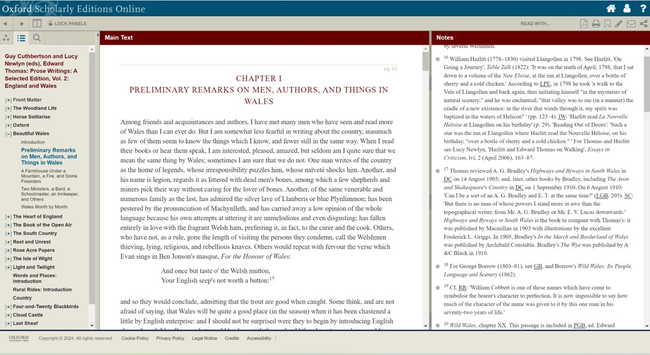
Figure 1: User interface for Oxford Scholarly Editions Online (OSEO): https://www.oxfordscholarlyeditions.com/display/10.1093/actrade/9780199558261.book.1/actrade-9780199558261-div1-23
The starting point of our approach to the Vernon Lee editing project is strongly influenced by Ohge's work, which considers not only on the practicalities of publishing digital scholarly editions, but also proposes a basis for a methodology in creating them. He draws on ideas from philosophic pragmatism for his principles of textual editing, which he sees as grounded in "experience", meaning the pragmatists' sense of those moments where thoughts and feelings are transformed into dynamic modes of participation and reciprocation by considering them in the light of practical action or consequence. Textual editing is, in Ohge's words, "an action-oriented application of learned principles so as to present reliable versions of works that teach others about the value of words". To put it another way, producing editions is a pragmatic, goal-based activity: it takes literary criticism and converts it into a practical task, something editors design through their own experience of the work, and which is intended to facilitate new and interpenetrating types of experience in readers. Ohge's model is fundamental to the way we wish to develop the strands of our Lee project and, as we outline, Lee's own thinking about human creativity and receptivity stands close to this model. Nonetheless, we also wish to add a further aspect of pragmatic thought that we see as relevant to this debate: the importance of emotional inclination in construing and facilitating these experiences. One of the earliest ideas in pragmatic thought was the so-called "will to believe", William James's idea that "Our passional nature not only lawfully may, but must, decide an option between propositions, whenever it is a genuine option that cannot by its nature be decided on intellectual grounds". We thus aim to add to Ohge's model of scholarly editing as the creation and facilitation of dynamic and reciprocal experiences of a literary work, a further recognition of the powerful role of emotional inclination, of "passional nature", in scholars' and readers' own openness or otherwise to those experiences, and a recognition of the practical contexts in which such emotional inclinations may operate.
3 LEE'S OWN THINKING
Ironically, one of the writers most opposed to "the will to believe" was Vernon Lee, who devoted an entire two-volume book, Vital Lies (1912), to debunking it. It is important to note, though, that her objection to the idea was principally in relation to its use in justifying what she saw as dubious claims about the nature of truth (i.e. the pragmatic principle that truth does not exist beyond the realm of practical action). Indeed, at the beginning of Vital Lies, she even recognizes pragmatism's "psychological recognition of the inevitable presence [. . .] of ideas, of opinions, of beliefs, which have not passed muster as true" and sees them as "inevitable and perhaps indispensable in the life of the individual and of the race" [our italics]. Yet in a scholarly edition, both Lee's and James's ideas can co-exist – clearly there are propositions or challenges in constructing a scholarly edition that can be based on non-pragmatic definitions of truth (of, say, whether a manuscript was written in a given year), and equally clearly, the practical action that is taken in the construction of the edition as a whole shapes the nature and "truth" of the experience of both editing and reading the work.
That said, it is Lee's later thinking that we see as most important to the methodological discussions around the digital scholarly edition. The period 1923-1925 was intensely fruitful for Lee: her thoughts on Proteus were formed in unison with the ideas behind two further non-fiction texts published at this time: her book-length work The Handling of Words (1923) and a comprehensive introduction she produced for the English translation of biologist Richard Semon's Mnemic Psychology (1909/ 1923). The Handling of Words is a collection of Lee's essays which examine the role of the author in creating meaning for the reader. It is, to all effects, a proto-structuralist work preceding Gerard Genette's work on intertextuality by sixty years [10, 11]. Its essays also provided a foundation stone for reader-response theory. Mnemic Psychology, translated by Lee's friend Bella Duffy, is a foundational text documenting the formation of memory, habit, and heredity as part of the mnemic principle. Despite their distinct specialisms, this group of texts are all concerned with the storage and recall of ideas and images, the ways in which humans develop and use creativity, and the benefits of interconnectedness and trans-disciplinarity over siloed expertise. It is these connecting or intertwined concepts in Proteus, The Handling of Words, and Mnemic Psychology that shape our approach to the development of a prototype digital edition of Lee's Proteus, one that aspires to utilize an alternative definition for apparatus: following Ohge, the framework and apparatus becomes a site for critical play and critical experience, not just as the equipment required for a scholarly edition.
Of fundamental importance to this endeavor is Lee's contention that it is the Reader of the text rather than the Writer who is essentially more active in constructing the meaning of the text (Lee's capitalization). This she suggests, is due to the Writer only being able to "draw upon the Reader's stored-up experience," she can "tell him something he does not yet know, only by evoking and rearranging what he already knew". Like the editors of any scholarly edition, the Writer must "think out the results of every movement" that they "set up in the Reader's mind, how that movement will work into, help, or mar the other movements that you have set up there already, or which you will require to set up there in the future". Here, Lee is pragmatic about the construction of a text, but also useful in terms of the playfulness with which she approaches her own creative practice, a method adopted by this article's authors when thinking through applications and uses for an online scholarly edition. This "movement" of the Reader's mind, directed by Lee/ the Writer, is as Lee suggests, non-linear, branching and responding, interactive, suggestive of the hypertextual linkages in digital editions. As Antonini, Benatti and Blackburn-Daniels have demonstrated, these 'links to be' extend or expand the structure of a document, directing us to both the preparatory works used in its production, and the works that followed. Rather than producing a monolithic, printed scholarly edition of Lee's texts (all forty-two published works) with a single disciplinary focus, the digital branch of this project aims to enhance the Protean text's meaning by providing a polyphonic and transdisciplinary commentary facilitated by a digital framework, allowing open source, open access engagement with the text for other scholars. In this way, the digital Proteus becomes a generative text (in the mode of Brian Massumi): the potential for finding new meanings is unexhaustable: "[e]ach return to the text, even by the same reader, will crystallize new thoughts".
3.1 Argument for Digital Methods
The use of digital methodologies in literary analysis can suggest that direct human contact with the text has been replaced by anti-reading, summative practices, and a shift away from the literary tradition of close reading. Yet as Pressman notes, the close approach itself is not a long-standing methodology of literary analysis: rather a development in modernist reading techniques. Indeed, close, or rather macroscopic, approaches to literary analysis may have become popular at least in part through the work of Lee's close attention to detail and meaning in works of fiction. Lee's work, as a response to a letter from Mr. Emil Reich in The Times, Lee began with the application of statistical tests to literature to ascertain how one writer differs from another. Yet, conversely, this 'closeness' of reading brought about by Lee's use of quantitative and qualitative approaches to literary criticism can be seen as a precursor to computational techniques and distant reading processes which allow for the recognition of pattern making within texts [5, 8]. This approach is presented to readers in The Handling of Words in the essays: "Syntax of De Quincey", the "Rhetoric of Landor" and the "Present Tense in Carlyle". Lee's methodology begins with the extraction of five-hundred-word samples at random from several nineteenth century canonical texts. Her study of the construction of Thomas Hardy's Tess of the D'Urbervilles notes how the prose is littered with abstractions, disjointed sentences, repetitions, which she argues allows for "lazy reading" and the "indulgence of the Reader's indolence". Analyses of texts sampled by Lee provide detailed counts of nouns and pronouns, verbs and verbal participles, adjectives and adjectival participles, and their effects. This process is not dissimilar – albeit a limited version– to part-of-speech tagging in corpus linguistics. The first major corpus for computational analysis was developed in the mid-1960s at Brown University which sampled 2000 words from approximately 500 texts, small in scale when compared to something like Birmingham University's WebCorp (1999-2024 https://www.webcorp.org.uk/live/) uses the entirety of the Web as its corpus. Whilst the scale of Lee's analysis in The Handling of Words is significantly smaller, her approach (both distant and close reading, simultaneously) allowed for a nuanced and psychologically informed interpretation, which computational analysis is now only attaining.
4 THE FUTURE OF INTELLIGENCE/ LIFE IS TOO SHORT TO READ EVERYTHING
This paper—and the whole idea of "Creative Intelligence" – provides an opportunity to suggest a new, useful, and playful version of Proteus which brings together for its Reader Lee's own philosophy of literary or textual analysis, Lee's understanding of the Reader's participation in repeated generating meanings, and the opportunities afforded by digital framing of a connected scholarly edition. Eve suggests that the "connective turn" of digitized texts (via Hoskins,) affords readers with a sudden abundance, pervasiveness, and immediacy of digital media, communication networks, and archives. Yet this connectivity also allows for disposability, misattribution, and mistrust. The magnitude of the connected experience is scalar, and whilst the application of an approach that foregrounds connectivity is undoubtably useful for the scholarly edition, there needs to be some editorial process to shape, and provide trusted and attributed sources. Care must also be taken to work in a trans-disciplinary fashion to avoid investing the edition "with an air of concretion" our own literary studies theses. As editors, we have a background in interdisciplinary literary studies, not computer science or digital humanities. Therefore, our hypothetical edition may be limited in scale: not by ambition or by discipline, but rather by those realities of programming and research funding that scholars of this field regularly point to. Yet, it is hoped that this exchange between Lee, the editors, and programmers, provides potential opportunities for rethinking the digital scholarly edition model.
Table 1 provides an ontological list of apparatus alongside the scalar potentialities for the editors' Protean open-source open access, digital edition. Rather than a linear set of apparatus, the hypothetical edition provides expansive interdisciplinary contextual material, information tagging and networks, with Digital Humanities methods, tools and analysis. Intelligence—or the Protean future of intelligence—is the pleasurable 'nimbleness, elasticity' and 'pervasiveness' of human progress, being 'assured of continual change' whilst remembering the 'connected sequences and combinations' of reality. As we know from both Nelson and Morville, knowledge does not fit into neat ontological categories, but is densely and complexly interconnected. Systems that suggest an orderliness, a hierarchy, categorization are, according to Nelson, nothing more than pretense: 'Everything is deeply intertwingled' [22, 23].
Table 1: Apparatus for the Protean scholarly edition
| Print Edition | Digital Edition | "Protean Text" |
| --- | --- | --- |
| Title | As print, plus: | As print & digital, plus: |
| Subtitle | Keywords | Corpus/ linguistic analysis |
| Author name/s | Abstracts | PoS tagging |
| Editors | Links to author/s' webpage | Timelines |
| Contents | Author/s' email address | Network Maps and Analysis |
| Acknowledgements | Author/s' affilitation | Website |
| Preface | Author/s' ORCID | Linked archival data |
| Introduction | Links to editor/s' webpage | Data visualization |
| Chronology | Links to publisher's webpage | Plain Text edition |
| Texts edited and cited | Links to Journal/ series | |
| Appendices | Hypertexts | |
| Bibliography | Hypermedia | |
| Indices | Intertextual material, e.g.: | |
| Contributor Biography | -correspondence | |
| Figures & Tables | -notes | |
| ISBN | -marginalia & reading journals | |
| | -holograph manuscripts | |
| | -typed manuscripts | |
| | -corrections & proofs | |
| | ISSN/ DOI | |
The ecology of apparatus of the Protean edition (Table 1.) and the site architecture that enables this ecology allows for what Hoskins calls an opening up of the text through its connectivities. This functional complexity allows for intertwingling and "entanglement". Antonini et al., define entanglement as "the sense of being intricately bound together", "tangled but still distinct", a recognition of the ecology of information required to curate a comprehensive, and useful digital scholarly edition. We would argue that this ecology of apparatus for the Protean edition avoids reductionist readings, instead producing an emergent edition in which the individual components, the nodes, links, and loops of textual data, produce an emergent edition. The concept of emergence is of course nothing new to Lee. Figure 2 is a digitized image of the first (English) page in Lee's Proteus notebooks, a quotation refering to C. Lloyd Morgan and his 1923 Gifford Lecture Emergent Evolution.

Figure 2: Page fifteen (in English) of Lee's Proteus; Or, The Future of Intelligence notebook. Digitized image part of the Holographical-Lee archive, courtesy of Sophie Geoffroy, Université de La Réunion & Projet EMAN (Thalim, ENS-CNRS-Sorbonne nouvelle), CNRS-ENS. Licence Creative Commons Attribution – Partage à l'Identique 3.0 (CC BY-SA 3.0 FR). https://eman-archives.org/HoL/items/show/2088
The concept of emergence is of importance in understanding complex systems, wherein the complex entity has qualities which emerge due to the interaction and cooperation of its individual components. Lee has drawn specific attention to page ten:
> "Then within this organic matrix, or some highly differentiated part thereof, already 'qualified' as [Prof. Alexander] says, by life, there emerges the higher quality of consciousness or mind. . . As mental evolution runs its course, there emerge, at the reflective stage of mind, the 'tertiary qualities'—ideals of truth, of beauty, and of the ethically right—having relations of 'value'."
For the Protean edition to have 'value' as an emergent frame for digital scholarly editions, it must be more than the sum of its entangled or intertwingled parts. As Lee writes in Proteus, it must be "the mysterious whole we know must exist" but that once revealed is "never twice the same". It must allow for the play of intelligent synthesis and the discovery of interactions between the curated apparatus, as a model for academic study, rather than an analytical breaking down of systems of knowledge.
5 THE GILDED CAGE? TOWARDS A "PASSIONAL" CASE FOR PROTEAN PRINT EDITIONS
Considering the status of printed scholarly editions in 2019, Paul Eggert dramatically declared that they have become "the gilded cage where canonical literature goes to die". In a useful sketch of postwar developments in this field, Eggert identifies the various ways that the necessity for linear scholarly apparatus has shaped the modern scholarly edition in print. Broadly speaking, he sees two main traditions. First is a Germanic tradition which does not seek to arbitrate between (say) different versions of a particular text, but which uses its apparatus to present textual information as a collective archival simultaneity – in a sense, presenting something proto-hypertextual, in that readers are presented with a macro-framework or set of instructions for finding a version of the text, rather than being presented with the text itself. The problem with this in print is that it simply becomes very difficult to read - what Germans apparently call Variantenfriedhöfen, the "cemeteries of variant readings", or in Eggert's words, "some weird form of textual algebra". Set against this is the predominantly Anglo-American tradition, which aims to preserve readability, but which does so by presenting a highly privileged singular version of the text in splendid isolation, thereby placing that version at the top of a hierarchy of significance in which all information about variants, or any other interpretative material, sit underneath. What Eggert means by the "gilded cage" is that both traditions have converged in modern print scholarly editions to trap their editors in an ironic tragicomedy:
> "To be deeply immersed in the particularities of the evidence is to want to bring them forward. Every scholarly editor feels the deep attraction of that outcome in order that the work be properly understood for the first time. But the archival effort of reporting – computer collating, machine collating, optical collating and oral collating, and then the extraordinary effort to boil this record down accurately and unambiguously into a condensed textual apparatus, on top of the rest of the editor's obligations to analyse the evidence and render it in a narrative form – often means that many years go by before publication is achieved. Little energy is then left over for introducing into ordinary literary-critical debate the new evidence that the edition brings to the table. And yet the editor is often the only person fully aware of it."
Eggert's pessimistic sense that the editorial labour involved in the preparation of print editions has failed to create a broader readership for its own results is understandable, and his prescription that digital and hypertextual methods can re-orient the modern scholarly edition towards being a more explicit form of editorialized argument is one with which we broadly agree, as our plans for our edition of Proteus make clear. make clear.
Why, then, is there any need for what van Zundert would call a "paradigmatically regressive" OSEO edition of Lee's works? Why, while taking our forward steps into editorial Proteanism, should we commit ourselves to simultaneously taking backward steps into the gilded cage by proposing a "prestige" print edition whose linear apparatus presents such intractable problems? Our (evolving) answer relates to Ohge's pragmatic principle, whereby scholarly editions are seen as sites of dynamic experience and opportunities for practical action, It is certainly true that digital editions offer more tools for exploring and curating the dynamism of these experiences; but it is equally true that the printed scholarly edition continues to holds an enormous emotional sway over humanities scholars in practice, even while they may assent intellectually to the arguments for digital and hypertextual methods in theory. This impulse cannot be simply written off as a lack of imagination, or a capitulation to the dominant structures of power and prestige in the discipline, or a reluctance to embrace new technical methods or skills, although it may be all of these. It is, in William James's words, a "passional" issue, for which emotional as much as intellectual assent from scholars and readers is needed. The pragmatic method, we contend, can not only guide us to a new form of Proteanism in the way that we present scholarly editions, it may also help us to new ways of conceiving existing methods. Eggert's pessimistic model, for example, posits a single editor exhausted and isolated by the labour of constructing linear apparatus, most of which goes unnoticed by a readership unable or unwilling to engage with it. However, the reality of an OSEO edition of Vernon Lee is that it will, we estimate, run to approximately 30-35 volumes, each with an individual editor or editors, working with the general editorship team. This is a network in which, if handled correctly, the dynamic experience may well be something that happens between editors, a form of experimentation and play that we hope to encourage amongst those working on the edition (and an area not often considered in the literature of this subject). The potential editors are likely be a large percentage of the relatively small number of Vernon Lee scholars working today.
Thus, in the case of the proposed OSEO edition, Protean principles may be helpful here not necessarily in the form of the final edited work, but in the way we design the experience of the editing process itself, bringing out the deep collaborative potential of such a project. We wish to foster that sense of reciprocal and dynamic experience but also to encourage assent by the participating humanities scholars by offering the emotional and institutional security of a "traditional" printed scholarly edition as the goal by which this activity is orientated, This will involve, for example, the setting up of online spaces where editors across volumes can annotate or add to the work of others – in other words, embracing collaborative Proteanism as the principle of editorial process rather than necessarily demanding its total inclusion in the form of that process's final result. The hypertextual aspect is thus, we hope, embedded in the network of scholarly activity itself – editorial collaboration as a form of embodied hypertext. If as Lee anticipated it is part of the editorial task to consider the "movements" an edition prompts in the mind of those who come into contact with it, the very existence of the online Proteus will reshape the scholarly centre(s) of gravity. The experiential aim is the emotional reward and intellectual excitement of editorial "play" for the scholarly community around Lee itself – but the pragmatic reality is that these scholars will nonetheless need to be persuaded to engage with such experiences in the first place, something we hope the reassurance of a recognizable print edition will provide, however apparently paradigmatically regressive its form may seem.
6 CONCLUSION
In conclusion, we have aimed in this paper to establish Vernon Lee's Proteanism as our guiding editorial principle as we begin the process of constructing a scholarly edition of her works, This tentative Proteanism, we contend, anticipates many of the debates around the value of hypertextual tools in digital scholarly editions, particularly those relating to praxis and play. We have built on Ohge's pragmatic model of editorship to both establish the lines on which to construct our own Protean edition of Lee's Proteus: The Future of Intelligence, but also to rethink the shared editorial experience of constructing a print edition with more traditional linear apparatus, whose collaborative networks may allow for them in process, potentially influencing the final textual form.
References
Alessio Antonini, Francesca Benatti, and Sally Blackburn-Daniels. 2020. 'On Links To Be: Exercises in Style #2' In 31st ACM Conference on Hypertext and Social Media (HT'20). 27–36.
Alessio Antonini, Sam Brooker, and Lorvo Škopljanac. 2023. Spontaneous transmedia co-location: Integration in memory. In Memory, Mind & Media 3, 7 (2024), 1-14. Cambridge University Press. DOI: https://doi.org/10.1017/mem.2023.13
Theodor W. Adorno. 1984. Aesthetic Theory. Trans. C. Lenhardt. Routledge, London.
Michael Bhaskar. 2013. The Content Machine: Towards a Theory of Publishing, From the Printing Press to the Digital Network. Anthem Press, London.
Sally Blackburn-Daniels. 2019. Thesis. 'The Scholar's Copy Book' and the 'Blotting Book Mind': Stratigraphic Approaches to Interdisciplinary Writing and Reading in Vernon Lee. University of Liverpool. https://livrepository.liverpool.ac.uk/3032394/
James Cummings. 2019. 'Opening the Book: Data Models and Distractions in Digital Scholarly Editing'. In International Journal of Digital Humanities. 1, 2. 179-193.
Paul Eggert. 2019. The Work and the Reader in Literary Studies. Cambridge University Press, Cambridge.
Martin Paul Eve. 2019. Close Reading with Computers: Textual Scholarships, Computational Formalism, and David Mitchell's Cloud Atlas. Stanford University Press, California, CA.
Hans Walter Gabler. 2010. Theorizing the Digital Scholarly Edition. Literature Compass 7, 2. 43-56.
Gerard Genette. 1997. Palimpsests: Literature in the Second Degree. Translated Channa Newman and Claude Doubinsky. University of Nebraska Press, Lincoln, NE.
Gerard Genette. 1997. Paratexts: Thresholds of Interpretation. Translated Jane E. Lewin. Cambridge University Press, Cambridge.
Richard J. Gerrig and Micah L. Mumper. 2017. How readers' lives affect narrative experiences. In Burke M abd Troscianko ET (eds), Cognitive Literary Science: Dialogues Between Literature and Cognition. Oxford University Press, Oxford. 239-257.
Andrew Hoskins. 2011. Media, Memory, Metaphor: Remembering the Connective Turn. In Parallax 17, 4. 19-31. DOI: http://dx.doi.org/10.1080/13534645.2011.605573
William James. 2000. Pragmatism & Other Writings. Edited by Giles Gunn. Penguin, London.
Vernon Lee. 1923. The Handling of Words and Other Studies in Literary Psychology. John Lane The Bodley Head, London.
Vernon Lee. 1925. Proteus; Or, The Future of Intelligence.
Vernon Lee, Proteus, or The Future of Intelligence, Carnet 1. Holographical-Lee, Sophie Geoffroy, Université de La Réunion & Projet EMAN (Thalim, ENS-CNRS-Sorbonne nouvelle), CNRS-ENS. Licence Creative Commons Attribution – Partage à l'Identique 3.0 (CC BY-SA 3.0 FR). https://eman-archives.org/HoL/items/show/2088
Vernon Lee. 1912. Vital Lies, Vol. 1. John Lane, The Bodley Head, London.
Brian Massumi. 2015. Collective Expression: A Radical Pragmatics. Inflexions 8, Radical Pedagogies. 59-88.
Catherine Maxwell. 2018. Vernon Lee's Handling of Words. In Thinking Through Style: Non-Fiction Prose of the Long Nineteenth Century. Edited by Michael D. Hurley and Marcus Waithe. Oxford University Press, Oxford. 282-297.
C. Lloyd Morgan. 1923. Emergent Evolution: The Gifford Lectures Delivered in the University of St. Andrews in the Year 1922. Williams and Norgate Ltd., London.
Peter Morville. 2014. Intertwingled: Information Changes Everything. Semantic Studios, Ann Arbor, MI.
Theodor H. Nelson. 1992. Literary Machines 93.1. Mindful Press, Sausalito, CA.
Christopher Ohge. 2021. Publishing Scholarly Editions: Archives, Computing, and Experience. Elements in Publishing and Book Culture. Cambridge University Press, Cambridge.
Jessica Pressman. 2014. Digital Modernism: Making It New in New Media. Oxford University Press, New York, NY.
R.R.D. Turco. 2016. 12. The Battle We Forgot to Fight: Should We Make a Case for Digital Editions?. In M.J. Driscoll & E. Pierazzo (Eds.), Digital Scholarly Editing (1–). Open Book Publishers. https://books.openedition.org/obp/3423
Christa Zorn. 2016. 'The Handling of Words: Reader Response Victorian Style'. In Vernon Lee: Decadence, Ethics, Aesthetics. Edited by Catherine Maxwell and Patricia Pulham. Palgrave Macmillan, New York, NY. 174-192.
Zundert, J. van. 2016. 5. Barely Beyond the Book?. In M. J. Driscoll & E. Pierazzo (Eds.), Digital Scholarly Editing (1–). Open Book Publishers. https://books.openedition.org/obp/3402
Do you like what you are reading? Subscribe to receive updates.
Unsubscribe anytime